
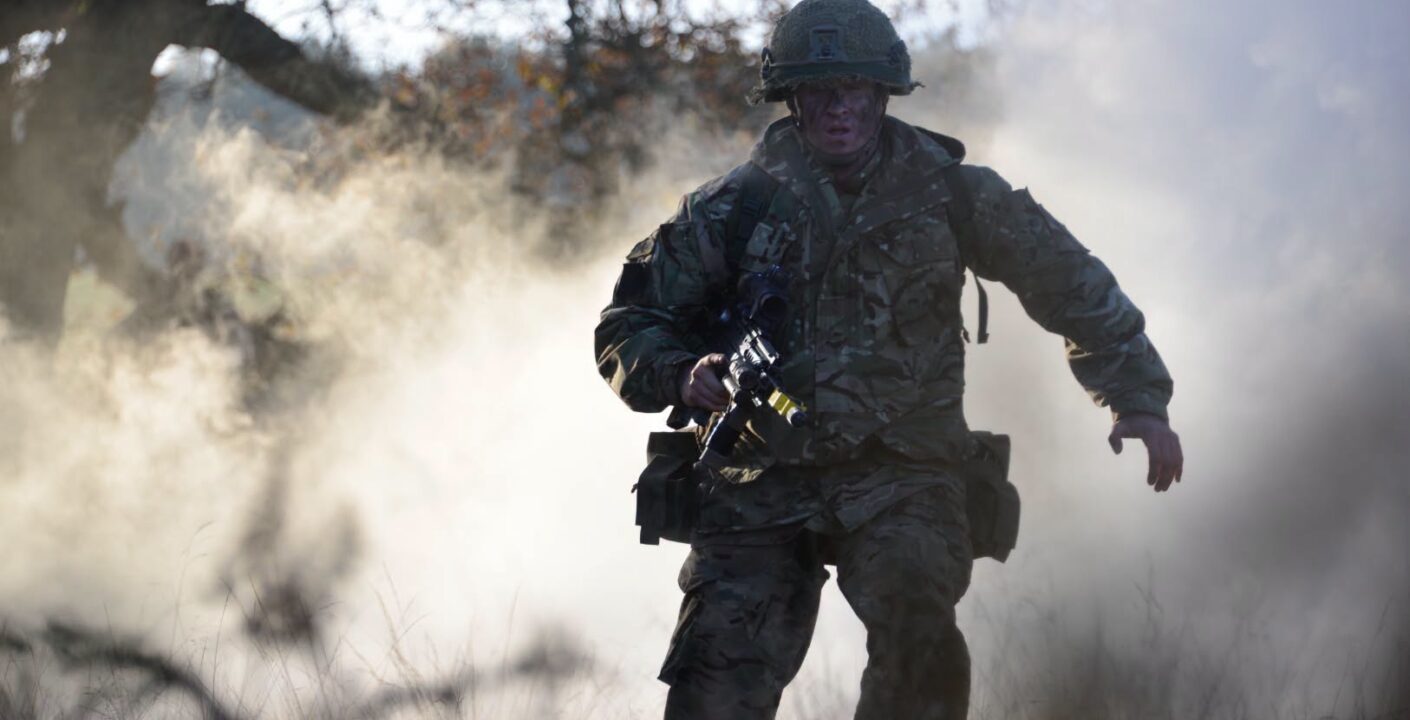
Britain’s Reservist Paratroopers – “Every man an Emperor”
Within the British Army Reserve sits one of the most demanding units a part-time soldier can join: the 4th Battalion, The Parachute Regiment — known simply as 4 PARA. It is the Army Reserve’s only parachute infantry battalion, and its soldiers are held to the same physical and mental standards as their full-time counterparts in 2 PARA and 3 PARA.
Role and Purpose
4 PARA exists to provide 16 Air Assault Brigade Combat Team with trained, high-readiness reservists. In practice, this means the battalion reinforces the Regular Army’s two parachute battalions — both at company level during exercises and as individual reinforcements on operations. Soldiers who complete 4 PARA training earn the right to wear the maroon beret and Parachute Wings, exactly as a Regular Army paratrooper would.
The battalion’s official strapline captures this dual identity well: it is the Parachute Regiment’s Reserve battalion, built to deliver airborne-capable soldiers to the wider Parachute Regiment and 16 Air Assault Brigade at short notice.
History
The lineage of 4 PARA stretches back to the Second World War, when the original 4th Parachute Battalion was formed in 1942 and saw action in North Africa as part of British airborne operations. The present-day Territorial Army battalion was re-formed on 1 April 1967, drawing together several post-war TA parachute battalions that had been raised in 1947 — including the 15th (Scottish) Parachute Battalion, based in Glasgow, and the 17th (Durham Light Infantry) Parachute Battalion in the North East.
Restructuring shaped the unit further:
- 1993 (Options for Change) — 4 PARA absorbed the 15th (Scottish) Battalion, which became 15 (Scottish) Company.
- 1999 (Strategic Defence Review) — the 10th (Volunteer) Battalion merged in, becoming 10 (London) Company.
- Army 2020 — 4 PARA was formally established as the reserve air assault infantry battalion of 16 Air Assault Brigade, a role it retains today.
One notable alumnus of the old 15 (Scottish) Battalion was the actor and comedian Sir Billy Connolly, who served in the Glasgow HQ in the early 1960s and later wrote about his TA experience in the song “Weekend Soldier.”
Structure and Locations
Headquartered in Pudsey, West Yorkshire (with the wider Parachute Regiment’s Regimental HQ in Colchester), 4 PARA recruits and trains soldiers from companies spread across the UK, including:
- A Company — Glasgow and Edinburgh
- B Company — White City (London), Croydon and Romford
- C Company — Pudsey and Hebburn
- D Company — Nottingham and Newport (with a further presence historically in Rugby)
Each company is typically built around two rifle platoons and a specialist platoon, allowing the battalion to draw on a geographically dispersed pool of part-time soldiers.
Becoming a Reservist Paratrooper
Joining 4 PARA follows a demanding but clearly staged pathway:
- Recruit training at the local Army Reserve Centre — basic soldiering skills delivered over evenings and weekends.
- Combat Infantryman’s Course — a two-week course at the Infantry Training Centre, Catterick, assessed in part by Regular Parachute Regiment P Company staff.
- Pre-Parachute Selection (P Company) — five weekends of build-up training plus eleven training evenings, culminating in the same core “Test Week” events faced by Regular recruits, condensed into a four-day course tailored for reservists. Events assess candidates over distances carrying loads, and include the notorious Trainasium (a pass/fail confidence and aerial obstacle test). Reserve candidates are not required to complete the Milling event or the Stretcher Race in the same form as Regulars, but face comparably tough time standards on the marches, steeplechase, and two-mile run.
- Basic Parachute Course at RAF Brize Norton — three weeks culminating in a series of parachute descents, after which recruits earn their Parachute Wings.
Reservists are expected to commit a minimum of 27 days a year, though many give considerably more, balancing military training around civilian careers.
Fitness and Selection Standards
Prospective recruits are advised to arrive fit: the initial Army Reserve Recruit Selection weekend requires a 2,400m run in under 14 minutes, but candidates aiming for the 4 PARA cadre are typically encouraged to bring that time down closer to 10 minutes 30 seconds to give themselves a competitive start. From there, training intensifies toward the P Company standard, widely regarded as one of the toughest infantry selection courses in the British Armed Forces.
Operational Record
Despite being part-time soldiers, 4 PARA’s companies have a track record of overseas deployment and exercise, with personnel serving alongside Regular Army units in locations including the United States, Australia, France, the Falkland Islands and Egypt. Individual reservists have also deployed on live operations as reinforcements to 2 PARA and 3 PARA.
Identity and Traditions
4 PARA shares the wider Parachute Regiment’s motto, Utrinque Paratus — “Ready for Anything” — along with its nicknames “The Paras” and “The Red Devils.” The battalion also carries its own nickname, “Fighting Forth,” and like the rest of the Regiment marches to “Ride of the Valkyries” (quick march) and “Pomp and Circumstance No. 4” (slow march). The Shetland pony “Pegasus” serves as the Regiment’s mascot.
Why It Matters
4 PARA occupies a distinctive niche in the British Army Reserve. Unlike most reserve infantry units, which mirror standard line infantry roles, 4 PARA trains its soldiers to the specialist standard required for airborne insertion — parachuting, air assault tactics, and rapid deployment. This makes it one of the few reserve units in the British Army where volunteers train and are held to a standard functionally identical to that of full-time regular soldiers, all while holding down civilian jobs and lives.
Got what it takes?
Get in touch with 4 Para Recruitment and get a taste of commitment and the challenge behind one of the Army Reserves most rewarding role! Check out their social media or check online for your closest unit